Before arriving at Social Futures’ Supported Temporary Accommodation hub in the Tweed, Andrew was living through what he describes as a very dark period in his life.
“I was suicidal. I was scared every day,” Andrew shares. “I was in a very dysfunctional, hostile environment… I was struggling with my mental health.”
Andrew found himself facing homelessness after the breakdown of a family relationship. A path to stability arose when he was referred to Social Futures where he was supported through a new model of care for people experiencing homelessness in the Northern Rivers.
The South Tweed Supported Temporary Accommodation hub provides more than a roof over a person’s head. Rather, it is designed to be a launchpad for recovery and long-term wellbeing. Unlike traditional motel-based temporary accommodation, which can be isolating and lack necessary support, Social Futures’ 70-unit hub provides a safe, congregate environment where residents can access the help they need right away.
Team Leader for Accommodation Services at Social Futures, Charlie Walker, explains the unique model.
“Rather than people who are experiencing homelessness and falling into crisis waiting for help to come to them, here on the day of their arrival, they’re assigned a Program Worker who will support them for the duration of their stay.”
The environment is intentionally designed to foster a sense of value and respect, with onsite staff, 24/7 security, communal spaces, laundry facilities, and even consulting rooms for visiting GPs and practitioners.
“People staying here know that when they put their head down at night, it’s only the people who are meant to be here who are going to be here,” says Charlie.
“They know that if they have any questions around housing or if they want a referral for mental health, AOD, behavioural support – anything like that, they can just come down to reception and ask, and we will put that into action for them. They’ve got a team around them all the time who are here to provide that help.”
For Andrew, the sense of security was life changing. After years of feeling unsafe, he says he finally found a place where he could breathe.
“The thought that I can come here, I can sit down and don’t have to fear for my safety and stuff like that. That’s the stuff I’m really grateful for,” Andrew says. “The room is really nice. I spend most of my time reading or listening to music or going for walks.”
Andrew was immediately connected with a program worker who helped him to navigate appropriate supports and plan for his future. This wrap-around support and security allowed Andrew to focus on his health and wellbeing.
“This year has been the most positive in years,” he reflects. “I felt like I’d been through hell and back… I don’t feel that anymore. Things are finally starting to work out for me. I feel safe.”
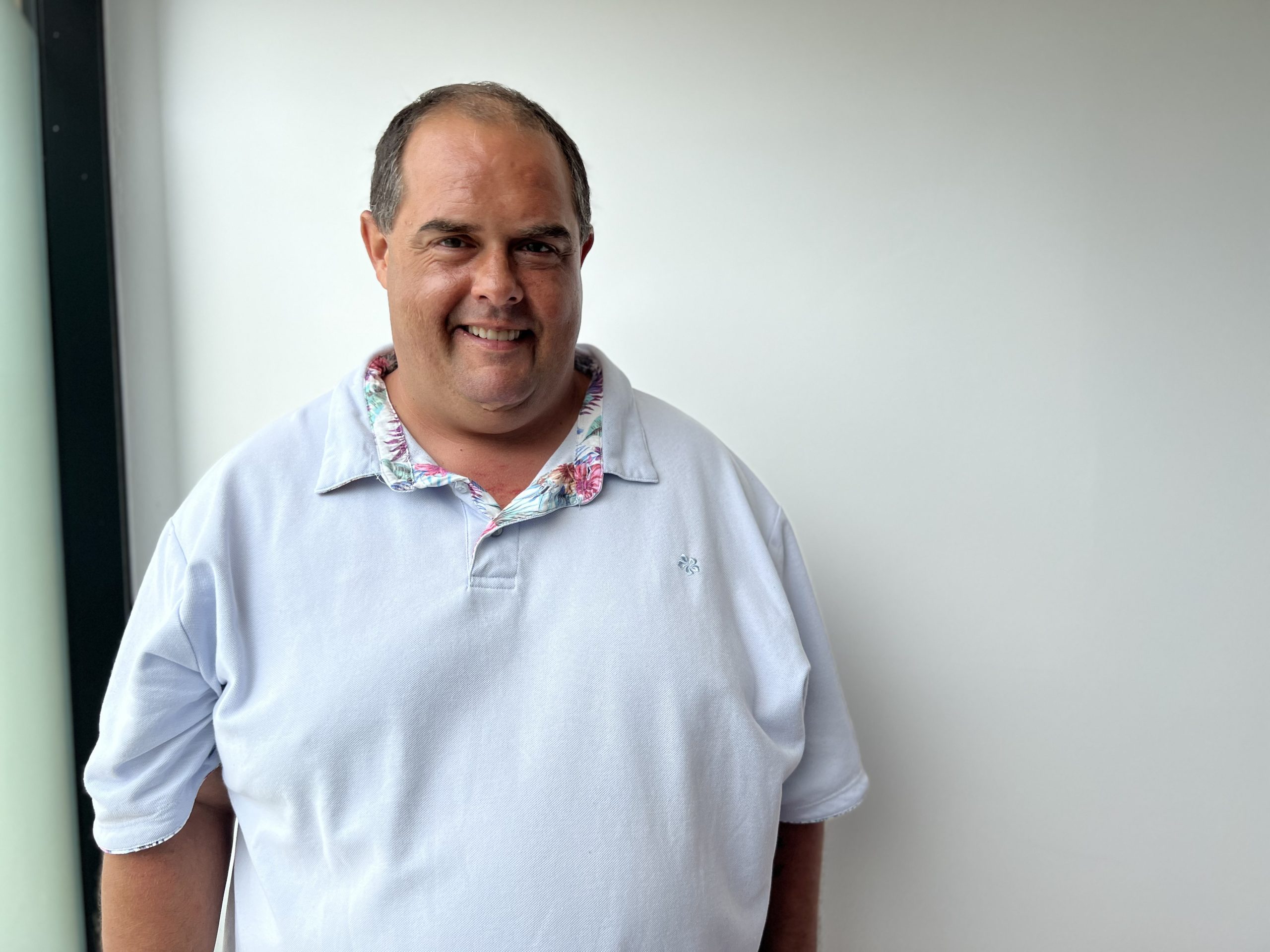
Andrew was connected with an NDIS support team, including a social worker, recovery coach, and physiologist, who have been instrumental in his path to recovery. Recently Andrew secured a permanent home, describing the moment he found out as an overwhelming relief.
“Oh, it was such a relief. And it’s like, just before Christmas. It’s a great Christmas present as well,” he says.
Today, Andrew is looking forward to the future with newfound optimism.
“This is the first time in years I actually feel positive about the future. I used to be scared and worried about the future, and depressed about the future, but I feel so positive now.”
He plans to spend his time settling into his new place, focusing on his health, and enjoying the simple peace of having a home.
“I just hope this place keeps going,” Andrew says. “There is a lot of people that are grateful for this place.”
The Supported Temporary Accommodation model has quickly demonstrated its impact, with more than 70 people moving onto permanent housing since opening in April 2025.
Charlie Walker shares, “I’ve been working in the homelessness support space and the residential space for a long time, and I have been blown away by the number of positive outcomes we’ve gotten here.”
But the achievements go beyond numbers. Mr Walker explains that real success includes the transformation he witnesses in participants.
“It’s not just positive outcomes that are measurable by where the person goes next. It’s the people who come in with their heads down, where there’s no hope there. And within a week or two, change happens. Maybe it took them a few weeks to smile back when we say good morning, but now they’re coming in, and they’re initiating the conversation.”
“It’s watching people who at first sat by themselves in the smoking area. By the end, they’re going out for coffees with other people who are staying here,” Charlie says. These are the outcomes that are really hard to measure,” he adds. “You can’t put that in a KPI of happiness.”
People experiencing homelessness who are in need of emergency accommodation should contact Link2home for 24/7 phone support on 1800 152 152.
Social Futures’ Tweed and Lismore supported temporary accommodation hubs cannot accept walk-ins.