Paper Wings unique and relatable stories and personal messages from people with lived experience of disability.
Paper Wings messages of understanding and hope were created to foster community and connection through sharing unique and relatable lived experience of disability.
Read the reflections and revelations of those who took part in Paper Wings.

Bethany, 25
When I was first diagnosed with Retinitis Pigmentosa, a degenerative, inherited retinal disease, I truly believed that I would wake up one day and see nothing at all, swallowed by sudden and all-consuming darkness. Three years after diagnosis, I now understand just how wrong I was, how fear of the unknown held me hostage and how connecting with the blind and visually impaired community online has helped reshape my understanding of blindness and outlook on losing my sight.
One thing I wish people knew is that blindness is a spectrum. There is no one way to ‘look’ or ‘act’ blind. Everyone’s journey is unique. Two people with the same condition may have widely varied experiences and both are just as valid and important as the other. Finding community has also been the most vital thing in overcoming mental health struggles relating to my condition. I’ve learnt that I am never alone in what I’m going through and that by sharing my story with others, I am able to help uplift and support others who are on their own sight loss journeys.
Vikki, 68
Working in disabilities, fully independent, sharing looking after my autistic granddaughter to help my bi-polar daughter and being a very social person – my life was just the way it should be except for the chronic arthritic pain throughout my body which I had been managing for years.
Then it happened, the pain was so bad throughout my back and knees that it was very difficult to walk let alone continue to support others, and I had to agree with my peers that I couldn’t manage any more. My doctors advised that I had to stop working and prepare for both knee replacements to regain better mobility.
The news was devastating to me and I sunk into severe depression and became so anxious with the thought of going out in public that I isolated myself in my home.
After surgery, my mobility was only slightly improved, I could at least walk with aid, but I was struggling to regain my confidence or leave the house.
I had to accept that my life had changed forever and I needed help.
I attended a pain management program for six weeks, which was referred by my GP’s nurse. It took all my strength to go the first week and I remember being very teary. The program covered every aspect of acceptance, treatments and long term management of chronic pain.
Each week I found it easier to attend and by the program end, I had gained a true friend struggling with her own issues and strategies to use to help manage my chronic pain in my everyday life.
Now, some nine years since giving up a job I loved, I have accepted that I can’t live my life without support.
I continue with regular physiotherapy, to strengthen my upper and lower body to assist my mobility, therapy with a clinical psychologist and regular medications, to improve my mental health, regular outings with my support worker including aqua exercise, social and community participation, visiting friends and extended family and weekly support with domestic tasks I can’t manage.
Whilst I still experience chronic pain and continue with bouts of depression and anxiety I have found, and use, the tools gained to self manage on a daily basis.
To anyone suffering in silence, your life can improve by considering the following –
Scott, 52
At the time of receiving my diagnosis of vision impairment I was a 30-year-old adult I had already established a life including a relationship, friendships, and career path. What I wished someone told me at the time was to look at my new diagnosis as a whole and then look at it through another lens. It is only natural at the start of a diagnosis or at the start of the grief and loss process of what you have and what you may lose to concentrate on the negatives, counting off all the things that you are or will be unable to do. I needed to hear that that is ok to feel those things, but I should also look at what I can do and look for inspiration through others and their accomplishments. I did experience the feeling of hope when I was told to join a blind cricket team to which I did and I found that members of my team were lawyers working in courts, loan managers, Australian sports representatives and project managers to name a few.
I realised I too was still quite accomplished in the things I was doing. Over time and to this date I try to look at the positives of my disability, concentrating on what I can do rather than what I can’t. I have learnt to do things differently and become very adaptive to tasks I come across. It is important to acknowledge your loss but then overtime concentrate on the positives and you will find with a positive outlook you will attract positive people which will enhance your understanding of who you are and that your are as important as anyone else in your community. Good luck.
Cody, 24
I can still recall the feeling when doctors confirmed my parent’s worst fear. That my unsteady walking and lack of hand grip wasn’t just laziness or a phase but a lifelong disability. I can remember being given the worst-case scenario. Sitting in a doctor office as an eight-year-old being told all the things that I would likely never do. Like finish school, go to university or get a job. Then came the hardest part…
‘It is possible he could be wheelchair bound any time after his eleventh birthday’
There are still days now when I picture eight-year-old me leaving that office and the feeling that my hopes and dreams for the future were gone.
This year marks seventeen years since that day. And thanks to a lot of support and encouragement I’m happy to say that not only did I finish school, but I earned a band six and two band fives in my final exam. I didn’t just ‘go’ to university, in my last year of an undergraduate social work degree I was offered a place in the honours program because of my high performance. And this August will mark two years since I started my dream job that now sees me spending my days supporting other people to break down their barriers.
My journey is not a unique one. Every day I meet inspirational individuals who are challenging the status quo. And whilst it isn’t always easy, I’m proud to take up the fight and advocate for those who are far too often ignored.
For inspiration I have a poster in my bedroom. It’s of President Barack Obama’s first presidential campaign. Back when he was the underdog, and many viewed “yes we can” as a pipe dream. Every morning I look at that poster and remind myself “yes we can”
Yes we can – challenge the barriers to equality
Yes we can – fight against discrimination
Yes we can – continue to work towards our personal goals
Yes we can – never give up
I don’t know what will happen in the coming years. My disability is an unknown and there are still days when I need to use a wheelchair for safety. But for the most part I can mobilise with my handy walking stick.
And this year I will celebrate not only a quarter of a century alive but fourteen years of proving my doctors wrong.
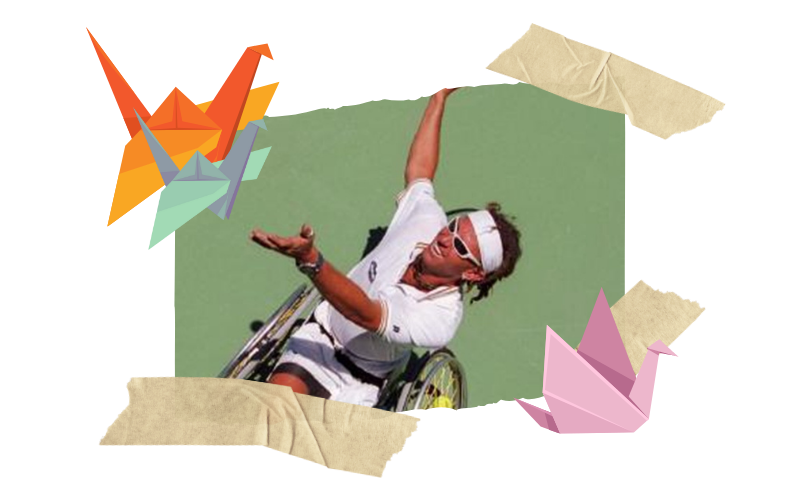
DJ, 51
For the two and half years following my accident I experienced so many confusing emotions, I was frustrated, I was angry, I was lost, I didn’t know where to go. It was a very dark time for me. It was my mum and her belief in me that kept me going. My light bulb moment then finally came when I thought about the sports person I was before my accident and considered how I could play sport again in a wheelchair. This is where it all changed for me.
I figured out it’s all about the way you think. Positive thoughts mean positive action. I was young and had a lot of life left in me so why not make the best of it and enjoy what my ‘new’ life has to offer.
I started playing wheelchair sports and the journey wheelchair sports took me on was the most powerful rehab I could have ever had. I surrounded myself with people with disabilities and hearing all their stories was exactly what I needed to move forward with my life.
It has now been 31 years since my accident and I love my life. I have traveled the world playing sport for 11 years straight, I am happily married with four beautiful children, I have a fulfilling full-time job…life is good!
Chantelle, 25
Sometimes it is okay to be not be okay, you don’t have to hide how you feel.
Judi, 42
I wish someone had told me as a child that it was okay to be different, that there is no need to hide your difficulties, and most importantly to be your true self. Instead I heard, saw, and experienced the exact opposite from those around me, you have to fit in, if you stand out you get teased, you miss out on opportunities, you are treated differently. Due to this I learnt pretty quickly to hide my disability, and in doing so I was hiding my true self from those around me.
By hiding my difficulties I felt protected from discrimination, from being treated differently, it allowed me to feel a sense of acceptance. I now realise that this was not true acceptance as I wasn’t being my true self. But I felt safe, life was harder, no one really knew me, and because of that I never got to really know anyone else, as they sensed I was hiding something, I never really developed a trusting relationship with those who didn’t know the true me, though I was liked, and included there was always a sense of something missing.
Now a few decades on, I have realised that by hiding my difficulties, my disability and my true self I have missed out on so much. I have met some extraordinary people throughout my life, but because I wasn’t able to be completely open and honest with them those relationships didn’t last. I have missed out on opportunities as I found them too difficult to do without support. I have travelled along a difficult road as most of us do and have become stronger and wiser for it.
Now a new journey has begun for me, to break down the walls that I built as a child to hide my difficulties, my disability and myself from others. I have now learnt that the braver, more open and honest you are about who you are, and the difficulties you experience, the more understanding that there is within your relationships and the community as a whole, and the better we all become as a result of this. We as people with disabilities each have the power to make a difference to the lives of those around us.
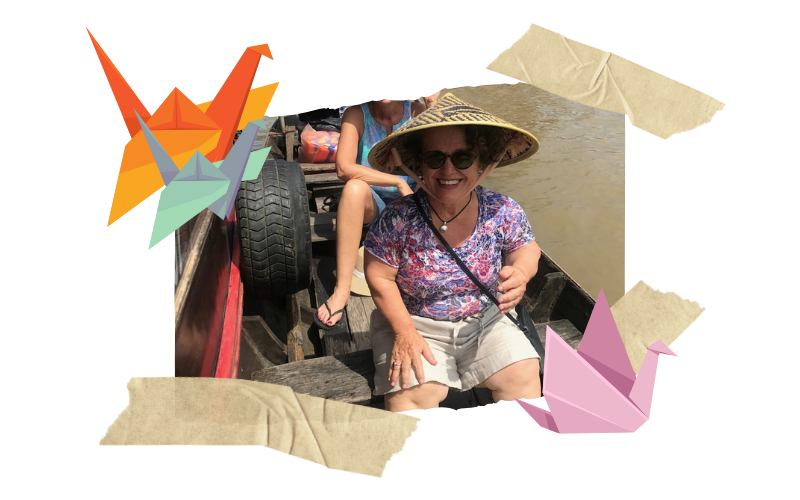
Maree, 62
I am writing to you as a 62 year old woman; yes a senior member of society!
Even though you are at the age to leave school and begin your career as a Nurse in disability, this is the beginning of an adventurous journey, as nursing is not the only occupation you will be employed in.
To begin, I want to tell you how much I love what you have experienced in your life to now. It certainly has not been dull … but an exciting, uplifting and sometimes a sad journey.
You have grown to 4ft tall, yes that’s all 120cm to be exact which is as a result of your short stature/dwarfism … which has proven to be one of your greatest assets.
Opps! I used the word “dwarfism” which you are not comfortable with at your age. You would cringe when anyone used the word speaking about yourself and especially in connection to Snow Whites’ house mates.
You will be pleased to know that I am happy, I don’t spend time sitting in the car to avoid people staring or a group of children jeering as they pass. I go about my life loving the confident woman I have become. There certainly has been ups and downs, a majority of the downs in the younger years was about being on my own and not getting hitched like a lot of your friends did, some at a very early ages.
Not being hitched meant that you became a traveler and headed off overseas like a lot of young people do, and you went on your own!! Go girl, you travelled to UK, Europe and Africa in your early 20’s. This actually worked so much in your favour, as a result of the experiences, when you came home you decided to leave your current career in disability/nursing and started studying photography for 4 years, which opened some many doors. You made such good friends, in 1988 you became a Photographer at the State Library of NSW and then onto Manager where you worked for 12 years, and during this time you went to Uni and completed a Grad Dip in Arts Management.
Over the past years you have less connection with the Short Stature People of Australia (SSPA) as you feel it was not needed as much, but in your early 40’s you connect with some short statured friends again and start dating a Dutch man of short stature, which results in you moving in 2000 to live and work in the Netherlands. You work in two international organizations as a Team Manager, you learn a foreign language and make some wonderful lifelong friends. After a while you and the Dutch man go your separate ways and in 2015 you move back to Australia to live, which brings you full circle to working back in disability with the NDIS.
In 2016 you decide to reconnect with the SSPA which resulted in you being elected on National Council, currently the Vice President and Liaison Officer for the Professional Advisory Board.
The combination of your work & life experiences has resulted in you becoming a happy, confident woman who is comfortable in her own skin. Enjoy the life ahead young one!
Gabriel , 42
You ARE enough
You WILL get across all of what you need to know
There is help and guidance
There is help to find help and guidance
There are experts, and they will help you make the right decisions
There are experts, and they will become available to you
You will find them and they will help you
It will take time – and that’s ok
You have time
You might make mistakes – and that’s ok
You will learn as you go
You know more about what you need to know than you know
It will take time to know this – and that’s ok
You might go in and out of grief
You WILL go in and out of feeling alone, and overwhelmed
And that’s ok
You are not alone
Life is now different to what you imagined
And that’s ok
Different is ok
Different is good
Life is good
You, too, will one day know this
You, too, will arrive precisely where you need to be
The pathway may be different to what you first imagined
And that’s ok
You ARE enough
You are not alone
You are enough.
Abbie, 42
If I could tell you anything at all about raising a child with a disability I would say, “you’ve got this, you are going to be okay and it will make sense one day.”
I would then encourage you to let go of the idea of what you had hoped being a parent would look like, it’s not for you. Something more amazing is in store for you.
This has been so important for me to make way for what being an Autism mum has given me in return.
I have been challenged in every way I know how to grow. I have been given patience I did not know I had in me, I see the world in so many different ways as the result of always looking at different perspectives and I am a stronger person for the experience after 23 years of being an Autism mum.
Laughter….some days you will laugh at the way your child works and at the things your child says…and some days you will cry a lot and that is okay too. I have learnt so much about love through never hearing my child say “I love you.” He thinks the words are unnecessary. I can now find the “I love you” in other words or actions such as “can you come with me I am afraid” or “trying to clean their rooms without being asked”. These things will be important. Find your people, connect in with other disability mums they will be your backbone of support and you will learn so much from each other.
A word of warning…..don’t forget you… I know I have been guilty of forgetting my own pursuits and am only just learning now how to explore them. Please don’t forget you. I still have a long time to go ahead of me but I trust that I can make time for me too a little better than I have in the past.
I wish you all the laughter, joy, tears, growing pains and success in this new life as you embark on it. It won’t be easy… it won’t, but it will be worth it.
Kayne, 25
The world can be really hard when you have autism, it’s too bright, too loud, and people will often
talk to you. IF any of these things sound like a problem for you, they probably have been all of your
life you probably just didn’t pay too much mind to them. So now you have a name for it all.
You start to own it. You start to deal with it. You can buy sunglasses, noise cancelling headphones, or
you just get used to the sun and the noise.
You start looking into things that interest you and eventually you will find one you’re really good at.
You will learn all you can on your own and realise to learn more you will need to talk to people.
Those people will understand the things you say and you will find them easy to speak too. You will
enjoy talking to them and they will enjoy talking to you. You will make more friends and it’s easier to
get along with them.
Early on, you might get a hard time from people you know, because they don’t understand you.
Some will joke about it, some will be rude, and you need to work out who means it and who doesn’t.
A friend that doesn’t judge you because you were born different will be a friend for as long as you
keep talking to them.
Autism is hard at first but eventually it just becomes okay and normal and you don’t even notice it as
much.
Tim, 62
Well hello! I know you are expecting words of wisdom but I doubt that will happen so perhaps let’s look at the experience gained over many years. I know that life hasn’t been perfect there were many missed opportunities to experience a fuller life. I experienced much doubt and lacked the courage to attempt things, please don’t do that.
Life is full of surprises so grasp each day with a vengeance and enjoy.
You have a disability, what do you know about it? Probably not much. Well it is time you found out. I’m not saying this to make you despondent but to educate you so that you can have that fuller life.
Get used to the word “disabled” and be proud
Always do your best. Do not be afraid to fail, everyone fails at something and in failure we learn and carry on. Yes, you have limits, we all have limits, but be the best you can be within those limits.
You will meet detractors and those that treat you as inferior. Those that seem to gain enjoyment from your discomfort. You are better than them. You will need support. So here is the big thing… FRIENDS.
Friends are your buddies through thick and thin. When you are having a bad day they will understand. Yes you will have some truly awful days, there is no sugar coating this, so be prepared. Your friends are your community.
Keep your friends close because as you get older you will need those friends. Go out of your way to create friendships, they will lift you up. Friendships are the greatest gift anyone can give and with friendship comes LOVE, a defining experience.
You are unique, make the most of your life through your uniqueness. Your uniqueness creates innovation as you will strive each day to overcome your limitations.
The word of the day is HAPPY. I think the saying goes “smile and the world smiles with you” and many days that is not easy.
If you can travel, go and see the world, experience the joys and wonders that are on offer. It is a remarkable world. It is your world.
I recently read a letter by Aubrie Lee and I doubt I can end this any better than what she wrote-
“To a younger me, and to any disabled child of this world: You are beautiful, you are powerful, you are perfect”.
Remember to love yourself for who you are.
Andie, 23
I did what some said I never would. Born 7 weeks premature after a very traumatic birth, I was lucky to live as it was. As I grew, I was simply not reaching the milestones a baby normally would. I couldn’t sit up, crawl or walk without help. Diagnosed with Spastic Diplegia Cerebral Palsy at approximately one and a half years of age, I was sentenced to a life in a wheelchair unable to walk.
As a kid my family never treated me any different and I understand why now. I was never wrapped in cotton wool. I was Andie first and foremost. Cerebral Palsy was and always has been a small part of me. If I wanted to ride a bike, my parents smiled and had one fitted with foot straps to keep my feet in place. If I wanted to climb a tree, my dad would lift me up and put me on a branch. If I wanted to dance, I got in my walking frame and off I went. I was just me.
School was a different story. I was the first. The first ‘disabled kid’ My school didn’t have ramps, elevators, nothing. This was all put in for me as I paved the way for those who came after me in primary school especially. I had teachers who were discriminatory and kids who teased. Why? Because I couldn’t walk.
As a kindergartener who had no fear or shame at the time, I’d hobble over with my two walking sticks or my frame and ask to play. The response I’d get was a look as if they thought I had two heads and a flat out ‘No’. Instead of getting mad, I hatched a plan. After many surgeries and Botox injections I knew I was ready. My thoughts weren’t centred around fear or how my body would cope. Simply, “If I am going to get friends and make others comfortable around me, I need to learn to walk”. So I did just that.
Without telling anyone – not my parents, not my doctors, therapists, not anyone, I grabbed a jewellery box from my dresser, put it in the middle of the room and told myself to walk from my bed to the box over and over. I did it. I’ve had to learn to walk at least 7 times since then, retraining my body after every surgery, but that day started it all.
I now look back on my school days and realise the kids weren’t cruel or malicious. They just saw a girl who was different when they were too young to comprehend something so big. They just thought “What do we do with this?” I believe if it weren’t for them, I wouldn’t have walked at all, so today I thank them.
Today I am 23 years old with a university degree, a partner, and a job I love. Someone once said I “suffer from Cerebral Palsy”. My first thought was “I don’t suffer from it; I live with it”. Yes, it sucks sometimes, a lot of the time, but it’s a small part of my life. I’m just me.