Social Futures’ Family Connect and Support (FCS) program helps families navigate complex challenges by providing early intervention, practical support, and connections to the right services. Through a strengths-based approach, FCS empowers families to overcome difficulties and move forward with confidence.
In recognition of National Families Week we are taking a look at Social Futures’ longest-running program, the Family Connect and Support Program, and how it helps families to find their way through tough times.
We know that parenting can be hard work and at times everybody needs a helping hand. When families face compounding challenges, from housing insecurity to domestic violence or navigating health supports, finding the right help can feel like an impossible maze. The service system is complex, waitlists can be long, and retelling traumatic stories to multiple providers takes a heavy toll.
Family Connect and Support (FCS) is funded by the Department of Communities and Justice (DCJ) and acts as a soft entry point by guiding families to the support they need. It connects families to the right services before their needs escalate, providing holistic assessment, warm referrals, and practical support.
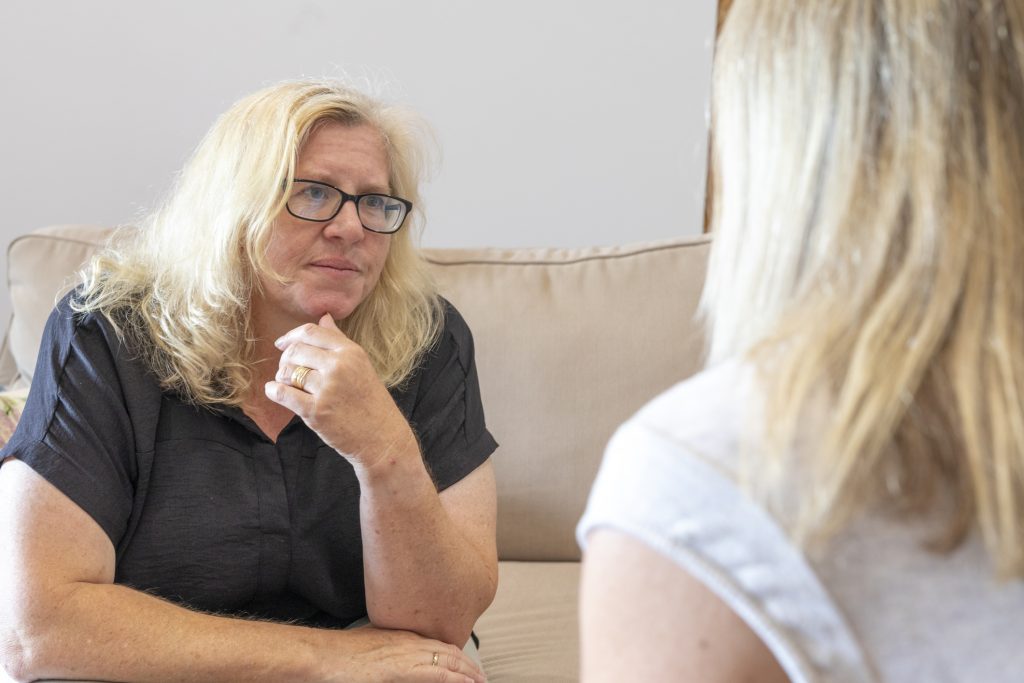
We sat down with FCS Program Worker, Susan to gain a view of the complex challenges families navigate, the critical importance of early intervention, and people’s profound resilience when it counts.
For an FCS Program Worker, there is no typical day. The program serves a broad demographic, essentially anyone with a child under 18 living in their care1.
Priority groups include Aboriginal children and communities, vulnerable families with children under 5, young parents experiencing hardship, children under nine with low-level autism or developmental delays, or children with mental health conditions, or those who at risk from disengagement from school or home life.
When asked about her daily role, Susan highlights the sheer diversity of the job.
“Every day is different. Every family’s different. There’s no one way to do things for every family,” Susan explains.
“We really unpack what’s going on for the family and listen to what their needs and challenges are, what their strengths are, and support them to find solutions for themselves.”
This strengths-based approach is central to the FCS model. Workers do not step in to “fix” a family. They walk alongside them, building capacity and helping them identify their own internal resources. It is a process that requires immense trust, quiet listening, and deep presence.
Over the past decade, the landscape of family support has shifted significantly. In regions like the Northern Rivers, a severe lack of affordable housing has created an acute crisis that spills over into every aspect of family wellbeing.
“There’s definitely a significantly higher concern around housing, and that comes a lot more into our casework than it ever used to,” Susan notes.
“We rarely assisted people with doing Homes NSW applications previously, but we now do them often. That could be due to a combination of the dire housing situation in the regions and also of services being inundated.”
This housing crisis frequently intersects with other severe challenges, most notably domestic and family violence (DFV). FCS workers are highly skilled in identifying and responding to family violence through trauma-informed, culturally safe practises. They help victim-survivors understand the cycle of violence, develop safety plans, and connect with specialised services.
“It can be really hard for a woman to recognise that she’s in a domestic violence relationship… when part of that violence is coercive control and convincing the victim that they’re the ones in the wrong,” Susan shares.
“Really supporting them to have a different view and helping them to connect with psychologists and domestic violence services is powerfully validating.”

A significant barrier for families seeking help is service capacity. When a parent finally builds the courage to ask for support, hearing that a service has a three-month waitlist can be devastating.
To combat this, FCS practices ‘Active Holding’. When an outbound referral service is at capacity, FCS workers do not simply hand over a phone number and walk away. They monitor the family’s circumstances, provide short-term case support, conduct home visits, and follow up with providers.
“There’s a fair waitlist for some referrals. So, we might hold the family in that time… we’ll advocate with the service to make sure that engagement will happen,” says Susan.
FCS also provides warm referrals, meaning the worker might attend the first appointments alongside the family. This ensures families do not fall through the cracks and helps build confidence as they transition to specialised care, whether that is a disability service, a mental health professional, or a youth support worker. Sometimes, immediate practical barriers prevent a family from moving forward. Through flexible brokerage funding, FCS can sometimes provide material aid to address immediate needs quickly. This might involve purchasing essential goods or services that keep a child safe and engaged in the community, such as a child car seat, bedding, nappies, back-to-school items, and groceries.
A vital component of the FCS program is supporting families navigating disability and mental health conditions. Families often feel overwhelmed or struggle to find inclusive environments for children with developmental delays. Susan frequently assists families in exploring support pathways, helping parents understand their children’s unique needs.
“A family with children with disabilities and mental health challenges, where there might also be current or historic domestic and family violence, requires a complex support network and a plan to forge a positive pathway ahead for the family.”
“We walk alongside the family, assisting them to take one step at a time,” Susan says. “We try to unpack ideas which might help the family along the way, from services and community supports that are available, to regulating activities and toys, and creating a settling home environment.”
“A family may find that regular walks along the river together is soothing or decluttering the home and playing quiet calming music can help to create a calm environment.”
The maximum period of FCS service delivery is typically four months2 to allow time to build trust, complete a holistic assessment, and coordinate a strong network of external supports.
As families build a strong relationship with their FCS worker, they are supported to grow their confidence, independence and connections, with the goal of feeling empowered to take the next steps forward.
“Sometimes it can just take a safe conversation and someone to feel validated and heard that just switches that over, and they do the rest themselves,” Susan reflects. “Because in the end, they’re living with themselves and their children and their family, and they know what’s best. They’re the experts of their own lives.”
Working with high levels of complexity, trauma, and systemic barriers requires resilience. When asked how she maintains her wellbeing after 12 years in the sector, Susan points to self-awareness, self-care, and a fundamental belief in human potential.
“Maybe it’s because I always hold hope myself. There’s always got to be something, even if it looks like there’s nothing,” she says. “It’s just nice to be able to assist in making a difference in people’s worlds… that can make that turning point for them to a better place, a place of thriving.”
If you know a family who could benefit from practical support, information, or connection to local services, encourage them to reach out. Referrals to the Family Connect and Support program can be made by anyone, including self-referrals from families themselves.
Call 1800 719 625 or email [email protected]
Social Futures delivers the Family Connect and Support Program throughout Northern NSW and in the Mid North Coast in partnership with Pathfinders.
Family Connecting and Support program is proudly funded by the NSW Department of Communities and Justice.