When young children face overwhelming events or trauma, they often lack the words to explain what they are feeling. That is where the Strong Minds in the Early Years (SMEY) program steps in. This free initiative works directly within preschools and kindergartens, supporting children aged zero to five, their families, and their educators to reduce the impacts of trauma.
For some time now, Lisa Wilson, a Counsellor with Social Futures SMEY program, has used a friendly puppet named Jack to help children to share their emotions. Through the magic of play therapy, Jack has helped countless children build resilience and find their smiles again.
Now, Jack is getting a new teammate. We are thrilled to introduce Jessie, the newest staff member joining the Social Futures SMEY team. Jessie is a puppet with a very important job: helping young children navigate big emotions.
To help you get to know our newest team member, we sat down with Jessie for a special interview about the incredible healing power of play.
Jessie: “Thank you, I am so happy to be here. I’m a puppet, and my very important job is to help children feel safe and heard.”
“I go to lots of kindergartens with Lisa and my best friend Jack. We play games, tell stories, and talk together. Sometimes kids have big feelings, like feeling worried, sad, or scared, and that’s okay.
We talk about those feelings and learn ways to help our bodies feel calm again.”
“I love helping children remember that they’re not alone, and that grown‑ups and friends are always there to help. I love playing, laughing, and making kids smile!”
Jessie: “That’s a really good question. When children play with puppets, they like to find someone who feels a little bit like them.”
“Some children have dark skin like me, and some children have names that can be for boys or girls, just like my name. That helps lots of different children feel happy and comfortable when they play with me.”
“When children feel like they belong, it helps them trust me more. Then we can play together, talk about our feelings, and help our bodies feel calm and safe.”
Jessie: “Grown‑ups are really kind and want to help, but sometimes they feel very big. I’m soft, small and am the same age as the kids.
They might tell me how they think I’m feeling like “Jessie is scared of the storm” or “Jessie feels angry” which are the same feelings they have inside them.
That makes it easier to talk, because the feelings don’t feel so big anymore.”
“When we play and tell stories, big feelings feel safe to share.”
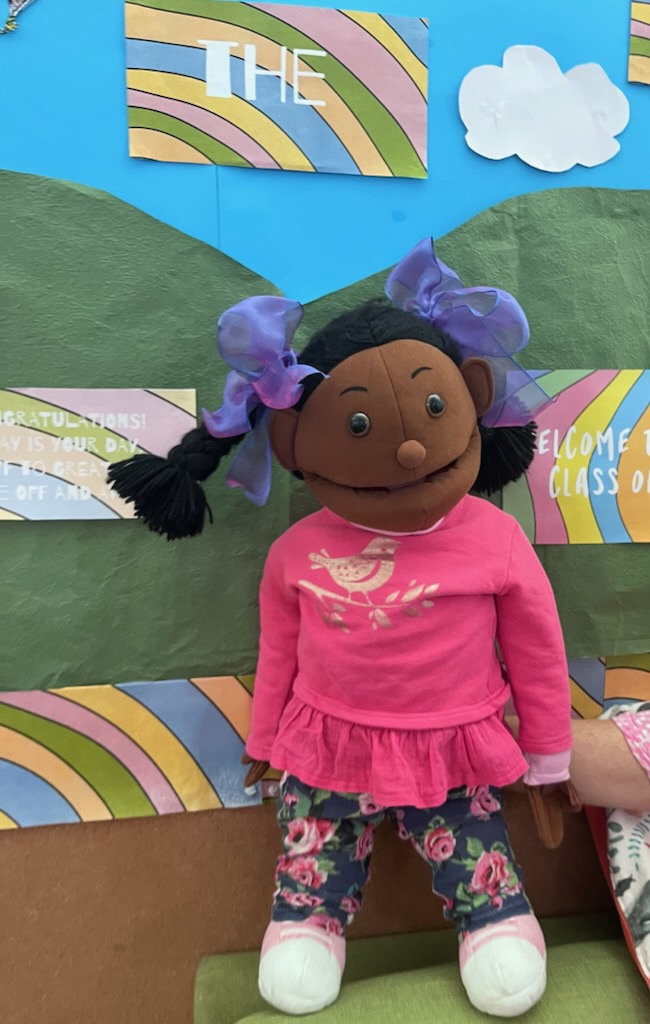
Photo: Jessie
Jessie: “Sometimes children can’t find words for scary or big feelings, so their feelings might show up as a sore tummy, big tantrums, or wanting to be alone.
I help by playing with toys and acting out what happened, like a flood or a family change, so the child can change the ending and feel in control.
We also practise ways to feel calm, like taking deep breaths. When a child teaches me how to calm down, they are really learning how to help themselves feel safe again.”
While Jessie’s approach looks like simple fun, it is backed by decades of psychological research. The use of puppets in therapeutic work with children has been a recognised practice since the 1940s. Experts have long understood that puppets lend themselves naturally to a process of self-expression.
Young children are generally in a developmental stage where thinking is concrete, and action often precedes rational thought. They cannot easily engage in standard cognitive behavioural therapy because they are still developing the ability to follow complex logical sequences.
Puppets bridge this gap perfectly. They allow cognitive behavioural strategies to be communicated indirectly through play. When a child engages with Jessie, they can externalise their fears. The puppet becomes a vessel for the child’s internal conflict. This therapeutic distancing is crucial. It means the child can process painful memories and try out new, adaptive behaviours without triggering their own defence mechanisms or anxiety.
Whether a child is dealing with the aftermath of a natural disaster, navigating a new foster care placement, or managing severe anxiety, puppets provide a non-verbal or low-pressure verbal pathway to healing.
Photo: Jack speaks to Olive about her experience of the 2022 flood.
Lisa Wilson, a Counsellor with the SMEY program, works alongside Jack and Jessie every day. She sees the transformative impact of this therapy first-hand.
“Children process their entire world through play,” Lisa explains. “When we introduce a puppet like Jessie, we are stepping into the child’s world rather than demanding they step into ours.
The puppet becomes a trusted confidant. I have seen children who have not spoken a word about a traumatic event suddenly pour their hearts out to a puppet.
It is a beautiful, gentle way to help them release the heavy emotions they carry.”
Lisa notes that the addition of Jessie to the team brings an important layer of inclusivity to the program.
“Our communities are wonderfully diverse, and our therapeutic tools should reflect that,” Lisa said.
“When children can choose a puppet that feels familiar or comforting to them, it builds an immediate sense of connection.
That connection is where trust grows, resilience is built, and healing begins.”
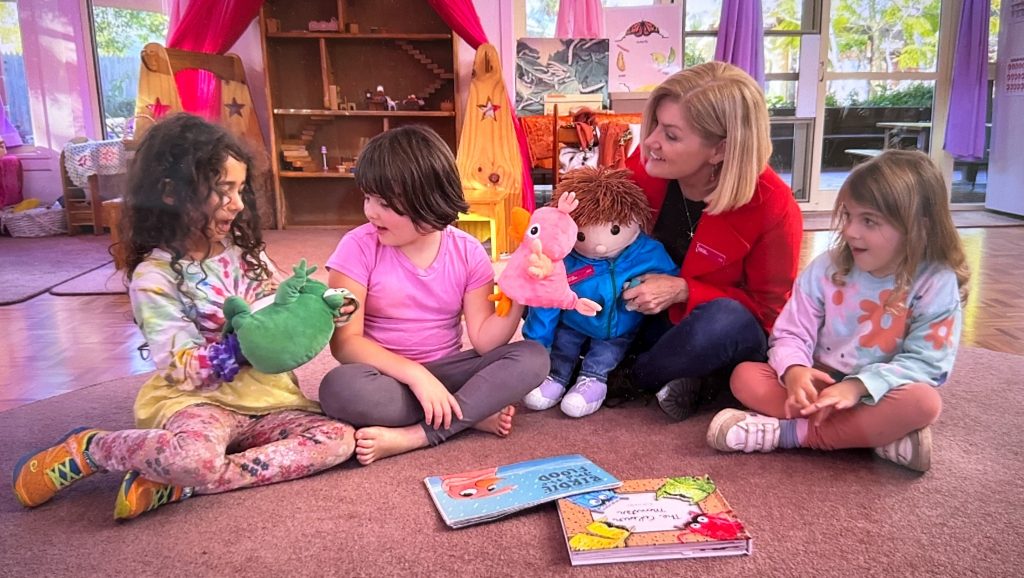
Photo: Lisa and Jack with children. Photo credit: Catherine Pilz, The Daily Telegraph
Expanding support into QLD
The Strong Minds in the Early Years program was initially developed as a rapid response to the devastating 2022 floods in the Northern Rivers region. During its first round, the initiative supported over 600 children, 192 educators, and 50 family members. The results showed significant improvements in emotional regulation and resilience across the board.
Because early intervention changes lives, the program has now expanded to the Gold Coast. Our team, along with Jessie and Jack, is now working to help more children recover from trauma and reduce the impacts of post-traumatic stress disorder (PTSD).
The program does not just stop with the children. We also upskill early childhood educators, giving them the knowledge and tools to identify signs of trauma and support children effectively in the classroom. By wrapping support around the child, the family, and the educators, we build stronger, more inclusive communities where everyone has the opportunity to heal.
To learn more about the Strong Minds in the Early Years program, or to discover how our services can support your family or preschool, please contact the Social Futures team today:
Call: 1800 719 625
Email: [email protected]
Strong Minds in the Early Years is funded through the Waratah Foundation