Advocacy, First Nations
January 26: A Day for Reflection
Written byAlex Lally
Published on25 Jan, 2026
Summary
In 1938, many Australians were going to the movies and listening to music at home.
At the same time, Aboriginal Australians were gathering for the Day of Mourning, calling for equality and full citizenship rights while living under strict government control and exclusion.
Learn more about the stark contrast in lived experience, and why January 26 still carries deep meaning today.
January 26 holds many meanings across Australia. For many Aboriginal and Torres Strait Islander Peoples, it can be a day that brings grief, exhaustion, and deep reflection. The date 26 January 1788 marked the proclamation of British sovereignty over the Eastern seaboard of Australia. For many First Nations People, it is experienced as Day of Mourning, Invasion Day, and Survival Day.
1938: Day of Mourning
The Day of Mourning was a protest held by Aboriginal Australians on 26 January 1938, the 150th anniversary of the arrival of the First Fleet. It was a call for full citizenship rights and equality, held at a time when many Aboriginal people lived under strict government policies that controlled many aspects of their lives, including:
- Government control over movement and daily life, including restrictions on where they could live or travel,
- Exclusion from public spaces and community life,
- Barriers to education and healthcare, including being refused access to schools and hospitals,
- Limited work choices and unfair working conditions,
- Low or withheld pay, with some wages controlled or kept by authorities rather than paid directly.
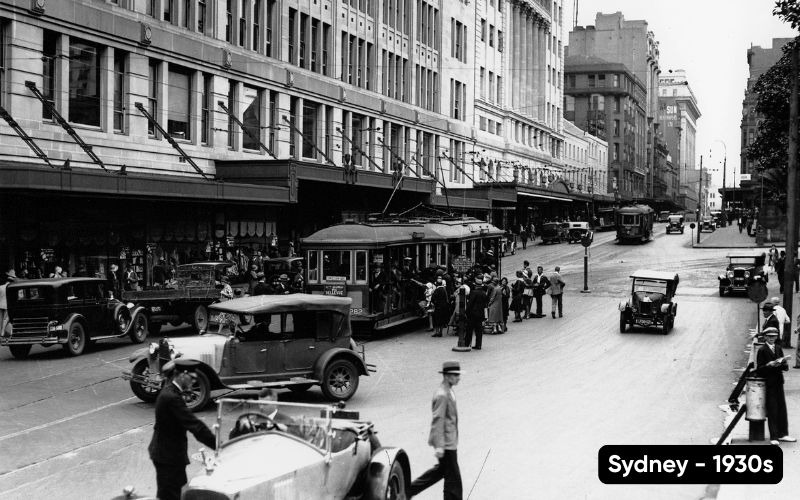
At the same time, for many other Australians, everyday life looked increasingly modern and familiar:
- Families went to the cinema and watched major films like Snow White and the Seven Dwarfs (1937), which was still a huge cultural moment in 1938
- People listened to popular music at home and in public spaces, including artists like Bing Crosby and Dame Nellie Melba.
- Towns and cities were active and connected, with shops, workplaces, cinemas, and routines that shaped everyday life.
- Weekends meant local sport, social events, and freedom to move through public spaces without restriction.
Mid-20th century: this was still happening
Many people may not realise how recent Aboriginal and Torres Strait Islander exclusion and control was, and how long these practices continued across Australia in different forms.
This is a period when Aboriginal people could still experience:
- Forced removal of children from families, creating the Stolen Generation,
- Restrictions on freedom of movement, including permits and controls over where people could live or go. In Perth from 1927 to 1954, the CBD was a “prohibited area” for Aboriginal people after 6pm unless they had permission.
- Barriers to education and healthcare, including being refused access to schools and hospitals,
- Stolen wages, where Aboriginal people worked but their earnings were controlled or withheld, limiting their ability to build security for themselves and their families.
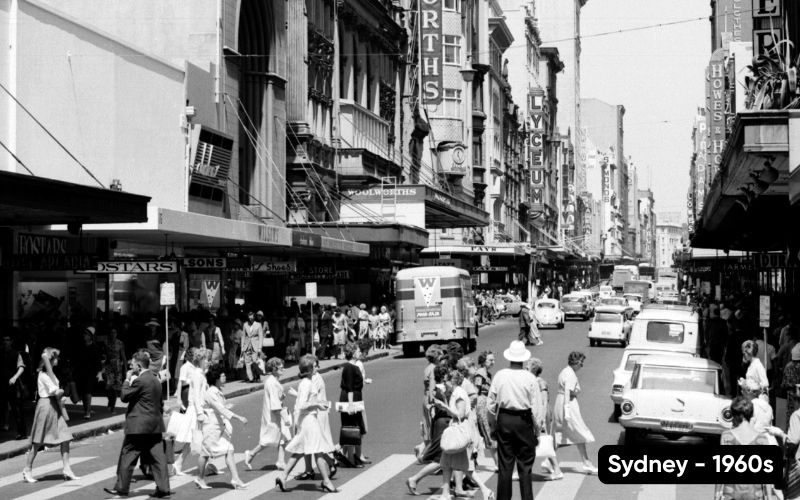
At the same time, and in stark contrast, everyday life for many Australians looked more like this:
- Families sat down to watch television at home, including popular shows like The Mavis Bramston Show and Skippy the Bush Kangaroo.
- People listened to artists like The Beatles, with albums like Help! playing on radios and record players.
- Families took photos on everyday cameras, went to work and school, did the weekly shop, and spent weekends at local sport and community.
For many Aboriginal and Torres Strait Islander Peoples, January 26 carries lived experiences that remain within living memory. It’s an opportunity for all of us to reflect, listen, and continue learning with the voices and resources shared below, offering a starting point for those who wish to deepen their understanding.
Resources: